Composites
Composites – Rethinking Lightweight Design
From the initial concept through to series-ready production, weba develops and manufactures high-quality composite components that meet the highest requirements for weight, strength and functionality. Using state-of-the-art manufacturing technologies, in-house toolmaking and extensive engineering expertise, we create cost-efficient solutions for the automotive industry and a wide range of other industrial sectors.
When maximum strength meets minimum weight, composites come into play. These innovative composite materials combine the advantages of different materials into one high-performance solution, opening up entirely new possibilities in modern lightweight design. Fiber-reinforced plastics such as CFRP (carbon fiber-reinforced plastic) and GFRP (glass fiber-reinforced plastic) combine high strength, stiffness and durability with maximum design freedom. The result is components that are lighter, more efficient and more sustainable, while meeting the highest standards of performance and quality.
weba supports customers throughout the entire development process – from material selection and component development to toolmaking and series-ready production. This enables us to create tailor-made composite solutions for demanding applications in the automotive industry as well as in a wide range of other industrial sectors.
Our Composite Technologies
Depending on the component, material and production volume, weba selects the optimal manufacturing technology. This results in cost-efficient composite solutions tailored precisely to your requirements.
RESIN TRANSFER MOLDING (RTM)
Precision for Demanding Composite Components
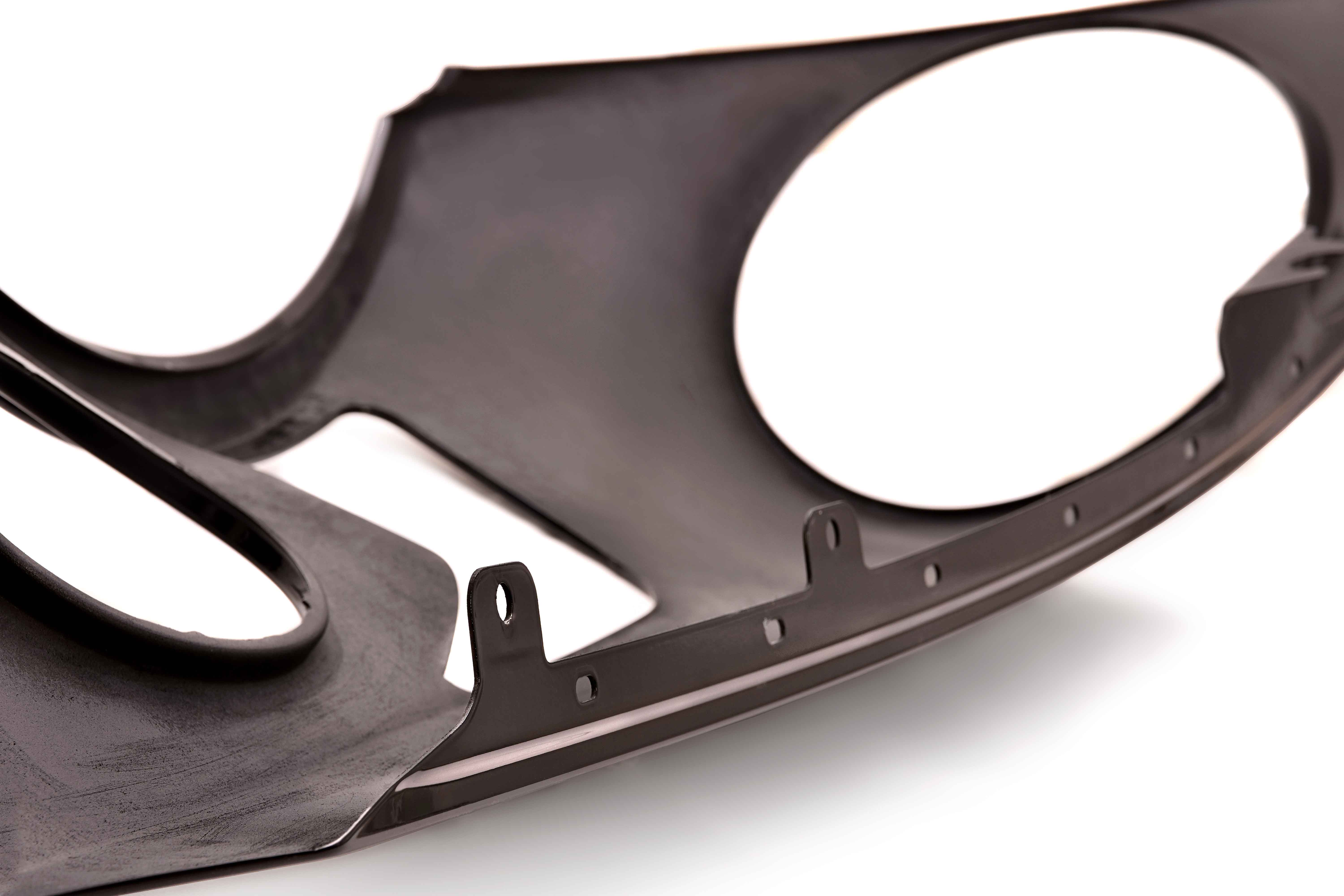
Resin Transfer Molding (RTM) is a closed-mold manufacturing process used to produce high-quality fiber-reinforced composite components. Dry fiber preforms are placed in a precision-manufactured mold. The resin is then injected into the mold cavity under controlled pressure, fully and evenly impregnating the fiber structure.
After curing, the process produces composite components with high strength, excellent surface quality and precise dimensional accuracy. Thanks to the closed-mold process, RTM enables reproducible production, tight tolerances and consistently high component quality – making it ideal for medium production volumes and demanding technical applications.
RTM is particularly suitable for structural components, housings, support structures and technical functional parts in the automotive industry, mechanical engineering, energy technology and other demanding industrial sectors.
COMPRESSION MOLDING
Short Cycle Times, High Quality, Strong Performance
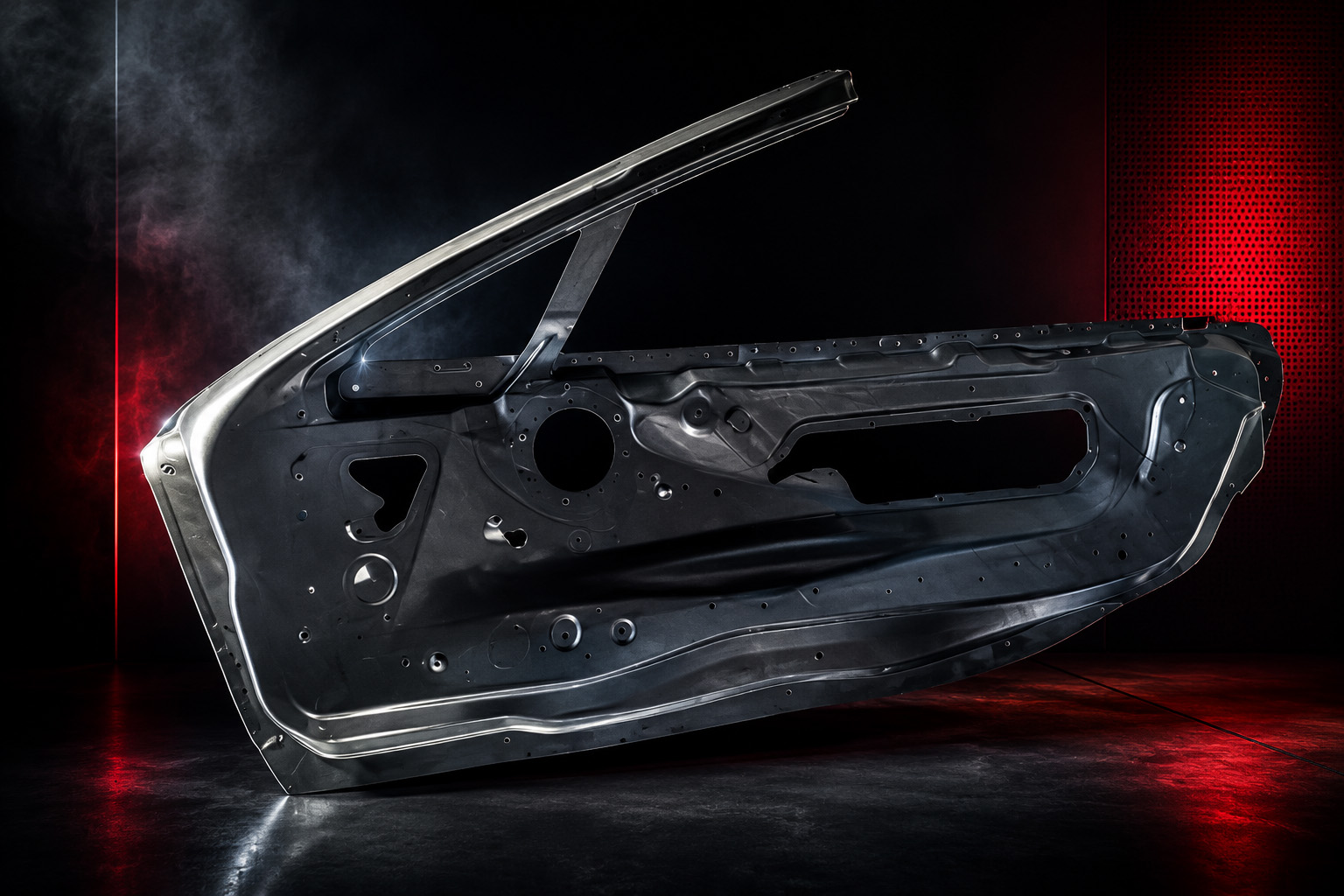
With compression molding, weba offers a high-performance solution for the effective production of high-quality composite components in medium to high volumes. The process combines short cycle times with high process stability, ensuring reproducible production and consistently high quality. Fiber-reinforced semi-finished materials are precisely molded in a closed tool under defined pressure and controlled temperature. This results in dimensionally accurate, durable components with excellent mechanical properties and high surface quality. Compression molding is ideally suited for structural components, covers, panels and technical parts in the automotive industry, mechanical engineering and other demanding industrial sectors.
THERMOFORMING OF NONWOVEN AND FIBER-REINFORCED COMPOSITE MATERIALS
Lightweight, Sustainable Components for Efficient Series Production
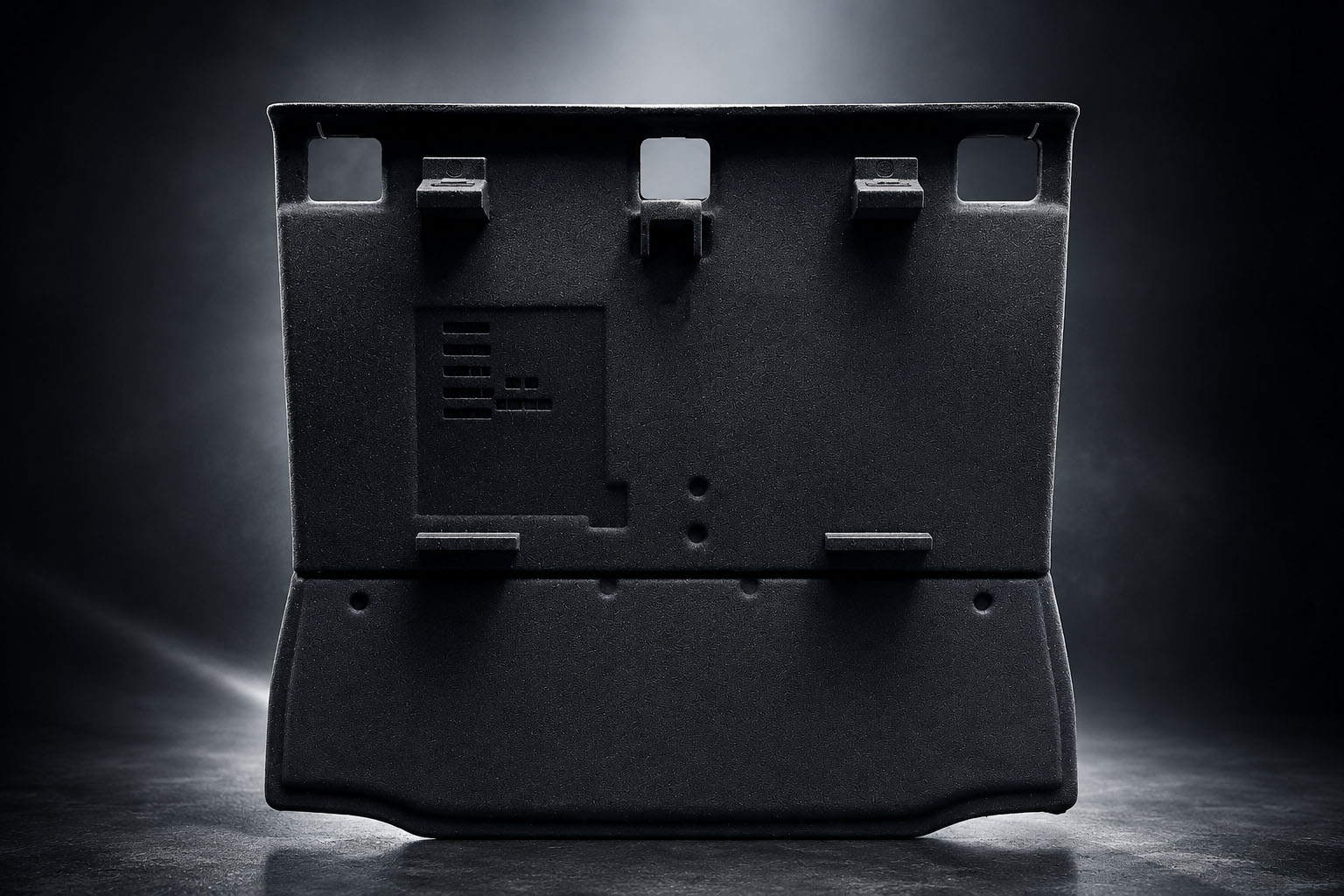
With the thermoforming of nonwoven and fiber-reinforced composite materials, weba develops and manufactures high-quality lightweight solutions for demanding series applications. The process enables the effective production of complex molded components with low weight, high stability and short cycle times. Depending on the requirements, a range of materials can be used, including PET fiber nonwovens, recycled textile fibers, natural fibers and hybrid materials. Precise forming in a heated mold produces dimensionally accurate components with excellent mechanical properties and a high level of process reliability. Thermoforming offers key advantages, particularly for sustainable mobility and industrial applications. The use of recyclable materials, efficient material utilization and resource-conscious manufacturing processes all contribute to future-ready lightweight concepts. Thermoforming is ideally suited for trunk floors, load floors, parcel shelves, door panels, interior and acoustic components, as well as technical trim parts for the automotive industry and other demanding industrial sectors.
AUTOCLAVE TECHNOLOGY
Maximum Quality for High-Performance CFRP Structures
With autoclave technology, weba manufactures composite components for applications with the highest demands on strength, stiffness and weight optimization. The process delivers maximum quality, outstanding process reliability and exceptional mechanical properties – wherever there is no room for compromise. Pre-impregnated fiber materials (prepregs) are cured in the autoclave under precisely controlled temperature and pressure conditions. This virtually eliminates air inclusions and ensures an optimal fiber-matrix structure. The result is highly durable components with excellent surface quality and maximum dimensional accuracy. This makes autoclave technology the preferred choice for high-performance applications where low weight, maximum load-bearing capacity and absolute reliability are essential – from aerospace and motorsport to high-performance structural components, prototypes and premium lightweight applications.
Why weba?
Composite projects require more than just the right manufacturing process. They need a partner who takes a holistic approach to materials, toolmaking and series production. With decades of experience in toolmaking and forming technology, weba combines engineering expertise with state-of-the-art composite technologies. The result is efficient lightweight solutions precisely tailored to our customers’ requirements.

Development and Engineering from a Single Source

Highest Quality Standards and Process Reliability
Prototype- and Series Production
Comprehensive Process Expertise
SHAPING THE FUTURE OF LIGHTWEIGHT DESIGN TOGETHER
Whether prototype, small batch or series production – weba develops composite solutions that optimally combine functionality, efficiency and quality. Talk to our experts and bring your next lightweight project to life with a strong development partner.
Development and Design
We support our customers from the early development phase and provide assistance with:
- Component design
- Material selection
- FEM simulation
- Lightweight optimization
- Design for manufacturing
Tooling and Fixture Manufacturing
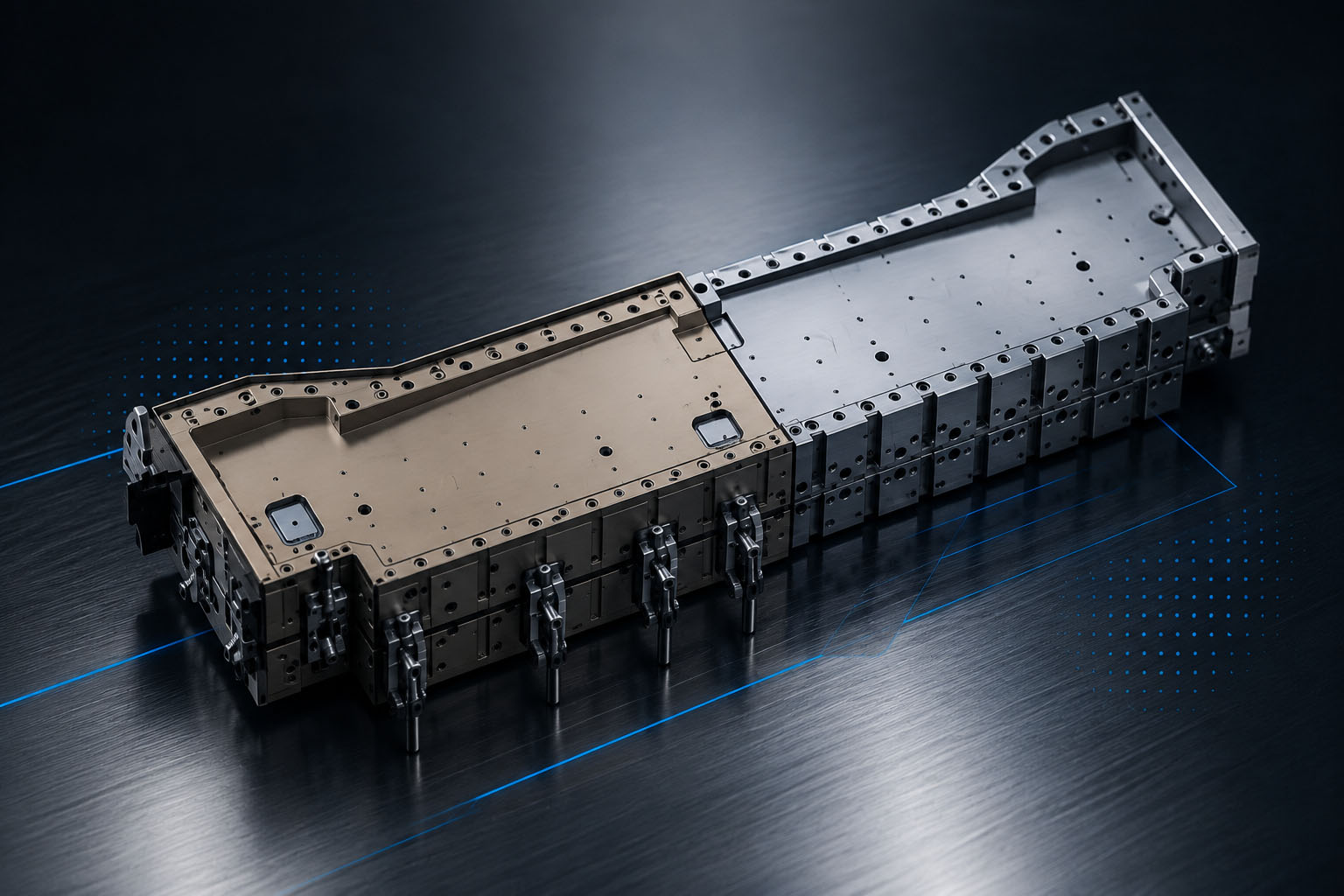
With our expertise in toolmaking, we create the foundation for efficient composite production:
- RTM tools
- Wet compression molding tools
- Thermoforming tools
- Prototype tools
- Clamping and inspection fixtures
Prototypes and Pre-Series Production
Fast implementation of development projects for:
- Feasibility studies
- Functional prototypes
- Small-batch production
- Pre-series components
Series Production
Industrialization of composite components for demanding applications.
FAQS COMPOSITES
Composites are materials made from at least two different constituent materials. They typically combine reinforcing fibers, such as glass or carbon fibers, with a polymer matrix.
Composite components offer low weight, high strength, corrosion resistance and a high degree of design freedom. This makes them particularly suitable for modern lightweight applications.
GFRP (glass fiber-reinforced plastic) offers a good price-performance ratio and high durability. CFRP (carbon fiber-reinforced plastic) provides significantly higher stiffness and strength while achieving an even lower weight.
Thanks to their high specific strength, composite materials enable significant weight savings while maintaining high load-bearing capacity. This helps improve efficiency, range and energy consumption.
A variety of manufacturing processes are available for composite components. The most suitable process depends on factors such as component geometry, material, production volume and the required mechanical properties. Key processes include RTM, autoclave technology, compression molding, thermoforming of fiber-reinforced composites, organosheet technologies and various hybrid processes. The right manufacturing method is selected based on both the technical requirements and the economic framework of the project. By combining engineering expertise, in-house toolmaking and modern manufacturing technologies, composite components can be produced with low weight, high strength and optimized functionality.
Recyclability depends on the material system used. Thermoplastic composites in particular already offer good potential for recycling and circular economy approaches.
Composite components are used in a wide range of industries, including aerospace, automotive, wind energy, medical technology, sporting goods and mechanical engineering.
Yes. Unlike many metals, composite materials are resistant to rust and many environmental influences, which can significantly extend their service life.
Yes. Modern hybrid components combine the advantages of metal and composite materials, enabling particularly high-performance lightweight solutions.
Composite technologies are considered a key building block in the development of energy-efficient products. They enable innovative designs and make a significant contribution to weight reduction across a wide range of industries.
Composite components combine different materials to make optimal use of their individual advantages. Common material combinations include:
- Carbon fiber-reinforced plastics (CFRP): exceptionally lightweight, stiff and strong – ideal for demanding lightweight applications.
- Glass fiber-reinforced plastics (GFRP): cost-efficient, corrosion-resistant and highly versatile.
- Hybrid composites combining metals and fiber-reinforced materials: combine the strength of metals with the low weight of composite materials.
- Thermoplastic composite solutions: offer short production cycles, high impact resistance and good recyclability.
The choice of the most suitable material combination depends on the specific requirements for weight, strength, stiffness, temperature resistance and cost-efficiency of the application.